
When Wood Fences Break Down: How Professionals Repair What DIY Can’t
A wood fence is one of those things you never think about until something goes wrong. One morning you walk outside and notice a post leaning at an odd angle, a board rotted through at the base, or a section that shifted after a recent storm. For many homeowners, the first instinct is to grab a hammer and some lumber from the hardware store and handle it over the weekend. That impulse makes sense, but wood fence repair is far more nuanced than it appears, and getting it wrong can turn a manageable problem into a full replacement. That’s where Diamond Exteriors comes in. With years of hands-on experience restoring fences across the region, their team brings the kind of trained eye that catches what most homeowners miss.
Wood is a living material, even after it’s been cut and shaped into a fence. It expands, contracts, absorbs moisture, and responds to the soil beneath it. According to the North American Fence Contractors Association, improper post installation and moisture damage account for the majority of fence failures in residential properties. What looks like a surface issue, a warped board or a peeling coat of stain, is often a symptom of something deeper happening below the ground or behind the wood itself.
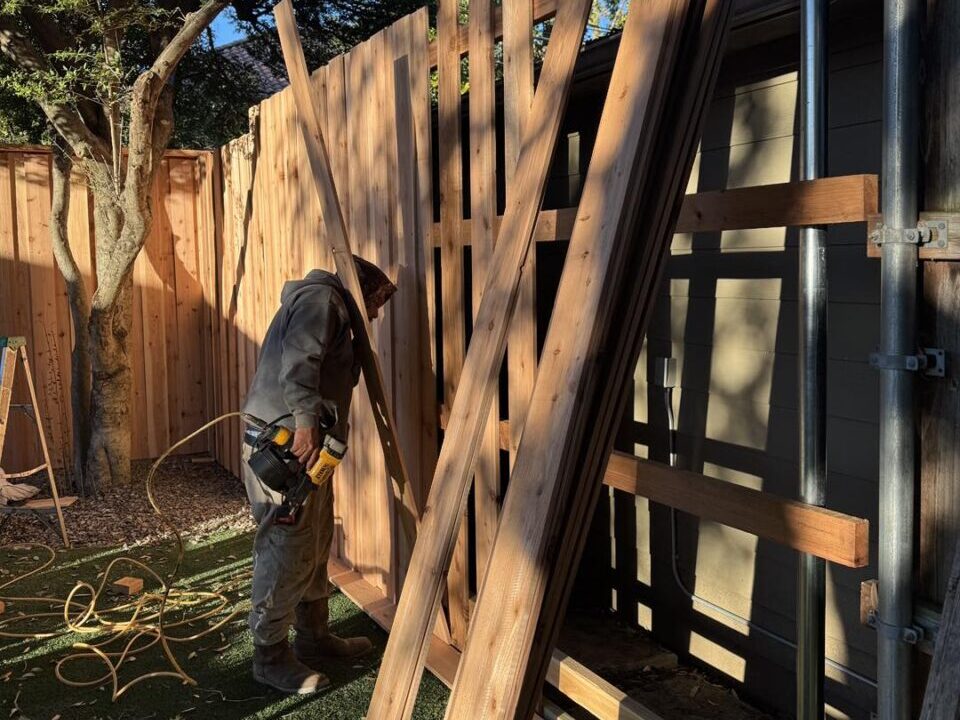
Why Wood Fence Damage Is Almost Always Worse Than It Looks
The most deceptive part of fence deterioration is how slowly and silently it progresses. Rot, for example, doesn’t announce itself. It starts in places you can’t easily see, at the base of a post where it meets the soil, on the backside of a picket where moisture collects, or along the bottom rail where rainwater pools after a storm. By the time rot is visible from your yard, it has typically been compromising the structural integrity of that section for months, sometimes years.
Post failure is one of the most common and costly issues professionals encounter. When a post begins to lean, homeowners often assume the fix is simple, just pound it back into place or add a metal brace. But a leaning post almost always signals that the concrete footing beneath it has cracked, shifted, or never been set at the correct depth to begin with. The standard rule in professional fence installation is to set posts at a depth of at least one-third of the post’s total length, with additional depth required in areas with softer or more expansive soil. When that foundation is compromised, no surface-level repair will hold for long.
The Structural Issues That Require a Professional’s Assessment
There’s a category of fence damage that goes beyond simple board replacement, and it’s the category that separates a temporary patch job from a lasting repair. Rail rot and separation fall into this group. When the horizontal rails that connect your fence posts begin to rot or pull away from their fastenings, the entire panel loses its rigidity. Pickets may stay in place for a while through friction alone, but a single strong wind event or a child leaning against the fence can bring down a whole section.
Hardware failure is another area that professionals are trained to evaluate. The screws, nails, brackets, and post caps that hold a wood fence together are constantly exposed to weather cycling. Galvanized and stainless steel fasteners are the industry standard for longevity, but many fences, particularly older ones, were built with standard steel hardware that has since rusted and weakened. During a professional inspection, a technician from a company like Diamond Exteriors will check not just the wood itself but every fastener and bracket holding the system together, because replacing a board while leaving corroded hardware in place is the definition of a short-term fix.
How Diamond Exteriors Approaches Wood Fence Repair
What sets professional repair apart from a weekend DIY project isn’t just the tools or the materials. It’s the diagnostic process. Before any repair begins, a qualified technician assesses the full scope of the damage, not just what’s visible. That means checking posts for ground-level rot using a probe, testing rail stability, evaluating the slope and drainage around the fence line, and identifying any sections where the grade of the yard is directing water toward the structure.
Once that assessment is complete, Diamond Exteriors develops a repair plan that addresses the root causes, not just the symptoms. Posts that have failed at the footing are removed entirely, the old concrete is broken out, and new posts are set at proper depth with fresh concrete and the appropriate post cap or gravel drainage layer to reduce future moisture contact. Rotted rails are replaced with pressure-treated lumber rated for ground contact, and pickets are re-fastened with corrosion-resistant hardware.
The company also helps homeowners understand what protective treatments can extend the life of a repaired fence. A quality penetrating oil or semi-transparent stain applied to clean, dry wood every two to three years dramatically slows moisture absorption and UV degradation, two of the biggest enemies of wood fencing.
Making the Right Call Before Damage Spreads
The cost of professional fence repair is almost always lower than the cost of full replacement, but only if the damage is caught and addressed before it migrates to neighboring posts and panels. A single failing post can put uneven stress on the sections attached to it, accelerating wear across a much wider area than the original problem zone.
If your fence is showing any signs of lean, rot, separation, or instability, the most practical step you can take is getting a professional evaluation before the issue compounds. Diamond Exteriors offers honest assessments and repair solutions built to last. Reach out today for a quote and get your fence back to doing what it was built to do.