
What Concrete Problems Does Expansive Clay Soil Cause in McKinney, TX?
Expansive clay soil in McKinney can cause concrete to crack, heave, settle, become uneven, and separate from adjoining surfaces. The problem occurs because clay-rich soil expands as it absorbs moisture and shrinks as it dries. These repeated soil movements can place uneven pressure beneath concrete patios, driveways, sidewalks, slabs, and other flatwork.
At Diamond Exteriors, we understand that durable concrete work in North Texas starts with more than the concrete itself. The ground beneath it matters just as much. McKinney’s challenging clay soil and cycles of wet and dry weather make proper site preparation, drainage, and concrete installation especially important. Our team focuses on workmanship designed for local conditions while providing straightforward guidance and attentive customer care throughout the project. Whether you’re considering a new patio, concrete extension, walkway, or another outdoor improvement, understanding how McKinney soil behaves can help you make better decisions and protect your investment.
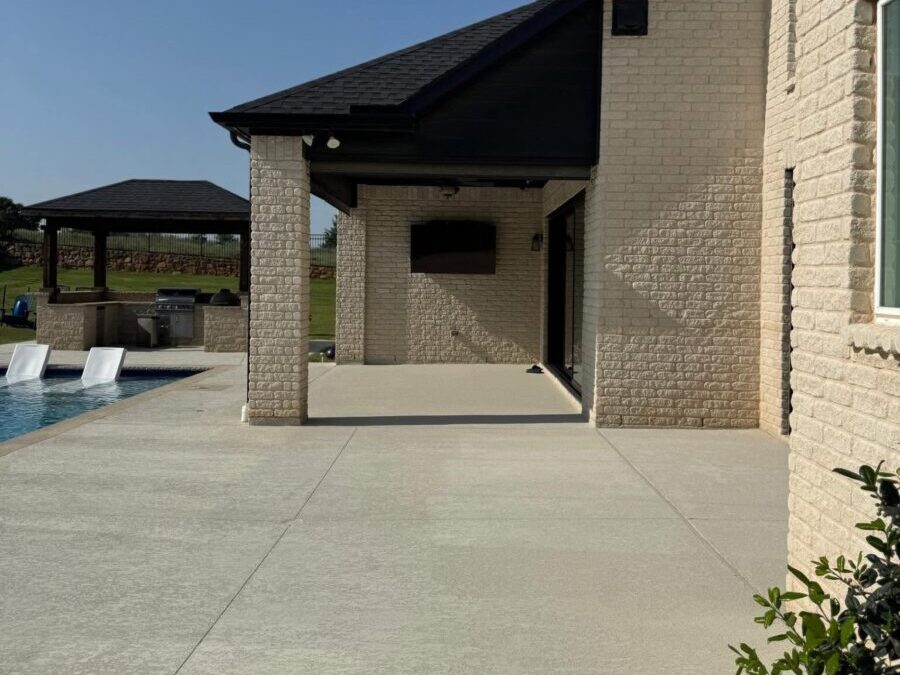
How North Texas Clay Soil Affects Concrete Surfaces
McKinney sits within the Blackland Prairie, an area known for clay-rich soils. The City of McKinney identifies Houston Black Clay as the primary soil type in McKinney and Collin County. According to the city, this soil absorbs water slowly, at approximately 0.10 inch per hour.
Texas A&M AgriLife explains that Vertisols, soils containing swelling clay minerals such as smectite, are common in the Texas Blackland Prairies. These soils swell when wet and shrink when dry, often producing visible cracks during prolonged dry periods.
For concrete, that movement matters. A slab performs best when it has stable, properly prepared support beneath it. When different areas of the underlying soil expand or contract by different amounts, the concrete above can be subjected to uneven movement and stress.
Why Does Expansive Clay Make Concrete Crack?
Expansive clay can contribute to cracking because changes in soil moisture cause the ground supporting the concrete to move.
During rainy periods or heavy irrigation, clay absorbs moisture and expands. During hot, dry North Texas conditions, the same soil loses moisture and contracts. The City of McKinney’s Hazard Mitigation Plan specifically identifies expansive soils as soils that swell or shrink with changes in moisture and notes potential impacts to foundations, roadways, sidewalks, and other structures.
Over time, uneven movement can contribute to several visible problems:
- Cracks across concrete slabs
- Cracks that become wider over time
- Separation between adjoining concrete sections
- Changes in elevation from one part of a slab to another
- Gaps developing alongside concrete edges
Not every concrete crack means expansive soil is responsible. Concrete naturally shrinks as it cures, and cracking can also be influenced by installation, reinforcement, drainage, loads, tree roots, and other conditions. However, recurring or uneven movement can be a sign that the supporting soil deserves attention.
Can Texas Clay Soil Cause a Patio or Driveway to Heave?
Yes. Expansive soil can push sections of concrete upward as moisture causes the clay beneath them to swell.
Texas A&M research on shrink-swell soils notes that movement associated with drying and wetting can strongly affect buildings and civil infrastructure constructed over these soils.
Heaving may leave one portion of a driveway, sidewalk, or patio noticeably higher than the adjoining section. Besides affecting appearance, uneven concrete can create drainage issues or uncomfortable transitions between surfaces.
North Texas weather can make moisture consistency challenging. Extended dry periods can cause clay to contract, while substantial rainfall can introduce moisture back into the soil. That wet-dry cycle is one reason soil conditions deserve careful consideration when planning concrete work in McKinney.
Why Does Concrete Sink or Become Uneven?
Concrete can become uneven when the material supporting it changes volume, settles, erodes, or was not properly prepared before placement.
With expansive clay, drying can cause soil to contract and potentially reduce support beneath portions of a slab. When moisture later returns, swelling may not occur uniformly across the entire area. The result can be differential movement, meaning one portion moves differently from another.
Warning signs homeowners may notice include:
- A patio that slopes differently than it once did
- Uneven sidewalk panels
- Driveway sections that no longer line up
- Water collecting where it previously drained
- Growing gaps between concrete and nearby structures
Changes in drainage should not be ignored. Standing water or concentrated runoff can create additional moisture differences around the concrete and surrounding soil.
How Can Concrete Problems Be Reduced on Expansive Soil?
Proper preparation and moisture management are among the most important considerations when installing concrete over expansive soil.
The exact approach depends on the site, soil, drainage, concrete application, and anticipated loads. In general, a well-planned concrete project should consider:
- Site conditions: Evaluate the existing grade, drainage patterns, and soil before installation.
- Subgrade preparation: The material supporting the concrete should be prepared appropriately for the project and local conditions.
- Drainage: Water should be directed away from areas where it can create persistent saturation or erosion.
- Proper concrete design: Slab thickness, reinforcement, joints, and other details should match the intended use.
- Consistent water management: Avoid creating dramatic moisture differences around concrete through drainage problems or excessive irrigation.
McKinney’s slow-absorbing Houston Black Clay makes water management particularly relevant. Texas A&M AgriLife also notes that compacted and clay soils are more susceptible to irrigation runoff when water is applied too quickly.
For major structural slabs or suspected soil instability, a qualified engineer or geotechnical professional may need to determine the appropriate solution.
What Should McKinney Homeowners Watch for Around Existing Concrete?
The most useful approach is to watch for changes rather than focusing only on whether a small crack exists.
Inspect patios, walkways, and driveways periodically, particularly after a very dry summer or an extended wet period. Look for new cracks, widening gaps, noticeable elevation changes, drainage problems, and sections that have shifted relative to nearby surfaces.
Pay attention to water as well. Downspouts, landscape drainage, irrigation, and grading can create areas that remain much wetter than others. Because expansive clay responds to moisture changes, significant differences in soil moisture around a slab can contribute to uneven ground movement.
Frequently Asked Questions About Expansive Clay and Concrete
Is expansive clay soil common in McKinney, TX?
Yes. McKinney is part of the Blackland Prairie, and the City of McKinney identifies Houston Black Clay as the primary soil type in McKinney and Collin County. Expansive soils are also specifically addressed in the city’s hazard mitigation planning.
Does every crack in concrete mean the soil is moving?
No. Concrete can crack because of normal drying shrinkage, temperature changes, joint placement, loads, installation conditions, or soil movement. Cracks accompanied by heaving, sinking, widening gaps, or significant elevation changes deserve closer attention.
Can drainage help protect concrete from expansive soil?
Good drainage can help reduce extreme or uneven moisture conditions around concrete, although it cannot eliminate the expansive characteristics of clay. Proper grading and thoughtful management of runoff and irrigation are important parts of protecting exterior concrete.
Should I worry about small cracks in my patio or driveway?
Small cracks are not automatically evidence of a serious problem. Monitor them for changes, particularly if they widen, become uneven vertically, affect drainage, or appear alongside other signs of slab movement.
Plan Concrete Projects for McKinney’s Soil Conditions
Expansive clay is simply part of building in North Texas, but understanding it can help homeowners make smarter decisions. Proper preparation, concrete design, drainage, and workmanship can all play a role in creating outdoor concrete surfaces suited to McKinney’s local conditions.
Ready to plan a concrete project in McKinney, TX? Contact Diamond Exteriors today to discuss your project and build with local conditions in mind.