
How Often Should You Stain Your Fence ?
Most wood fences in McKinney, TX, should be stained about every 2 to 3 years, although the right schedule depends on sun exposure, rainfall, wood condition, and the type of stain used. Fences exposed to intense Texas sun or frequent moisture may need attention sooner. Inspecting your fence each year helps you restain before the wood becomes vulnerable to weathering.
At Diamond Exteriors, we understand that a fence is more than a property boundary. It contributes to your home’s curb appeal, privacy, and overall outdoor living space. Our team works with McKinney homeowners to build and maintain outdoor features designed for North Texas conditions. That local experience matters when deciding how often to stain a fence because there is no single maintenance schedule that works for every property. The combination of strong sunlight, hot summers, seasonal storms, and changing moisture levels can gradually wear away a fence’s protective finish. By staining at the right time instead of waiting for obvious deterioration, homeowners can keep their wood fencing looking attractive while protecting it from unnecessary exposure.
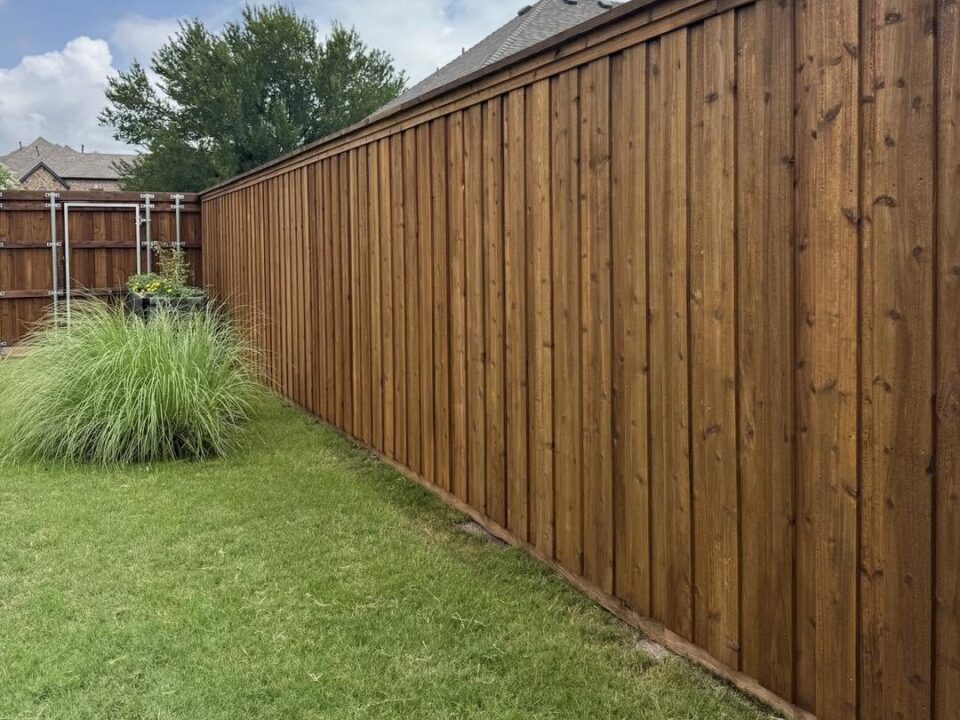
Best Fence Staining Schedule for North Texas Weather
A 2 to 3-year staining cycle is a practical starting point for many McKinney wood fences, but the condition of the existing finish should ultimately determine when maintenance is needed.
Research from the USDA Forest Products Laboratory shows why schedules vary. Its guidance indicates that an initial semitransparent penetrating stain on a smooth, fully exposed wood surface may last approximately two to three years, while subsequent applications can last longer. The Forest Products Laboratory also notes that stain durability depends on factors such as formulation, pigmentation, wood surface characteristics, and exposure to weather.
Why Does McKinney Weather Affect How Often You Stain a Fence?
Sunlight and moisture are two of the biggest environmental threats to an exterior wood finish. Staining helps reduce the effects of both by protecting the wood surface from sunlight and limiting moisture absorption. According to the USDA Forest Products Laboratory, exterior stains are specifically used to protect wood surfaces from sunlight and moisture.
Those concerns are particularly relevant in McKinney. National Weather Service climate data for McKinney shows normal summer high temperatures above 90°F in July and August. The same climate normals report approximately 42.32 inches of precipitation annually, with May historically averaging 5.72 inches.
For homeowners, that means a backyard fence can experience:
- Strong UV exposure during long, hot summers
- Periods of heavy spring rainfall
- Repeated wetting and drying
- Seasonal temperature changes
- Uneven weathering between sunny and shaded sections
A west-facing fence with little shade may therefore show fading and drying sooner than a protected fence on another McKinney property.
How Can You Tell When Your Fence Needs to Be Restained?
Do not rely on the calendar alone. Inspect the fence for fading, water absorption, dryness, and loss of color. These signs can tell you more about the condition of the finish than the fence’s age.
One easy check is to observe what happens when the wood gets wet. If water beads on the surface, some water repellency is probably still present. If the wood quickly absorbs water and darkens, the protective finish may be losing effectiveness. USDA Forest Products Laboratory guidance notes that wood can sometimes retain pigment even after water repellency has diminished, which is why appearance alone is not always enough to evaluate a finish.
Other warning signs include:
- Noticeable fading or graying
- Dry or rough-looking boards
- Uneven coloration
- Small surface checks or cracks
- Areas where the stain looks significantly more worn
- Water soaking rapidly into the wood
Checking your fence each spring and fall makes it easier to identify these issues before they become more significant.
What Is the Best Season to Stain a Fence in McKinney?
The best time to stain is during a stretch of mild, dry weather when the wood has had enough time to dry and the product can cure under conditions recommended by its manufacturer. In McKinney, spring and fall can often provide useful staining opportunities, but weather conditions matter more than the month on the calendar.
Avoid scheduling staining immediately after heavy rain. The wood needs to be sufficiently dry for the chosen product, and rain shortly after application can interfere with proper performance.
Summer staining is possible, but extremely hot surfaces and direct afternoon sunlight can make application more difficult. When working during warmer months, following the stain manufacturer’s temperature, moisture, and application requirements is essential.
Does the Type of Fence Stain Change the Maintenance Schedule?
Yes. Pigmentation and stain formulation can significantly affect how long a finish protects exterior wood. Clear or lightly pigmented products generally offer less UV protection than more heavily pigmented finishes.
USDA Forest Products Laboratory research explains that pigments help protect wood from ultraviolet radiation, with greater pigmentation generally providing greater protection. Its research also found that semitransparent penetrating stains are more durable than transparent water-repellent finishes.
As a general maintenance guide:
- Clear or lightly tinted finishes: Inspect frequently because weathering may become noticeable sooner.
- Semitransparent penetrating stains: Often provide a useful balance between showing the natural wood grain and providing weather protection.
- Solid-color stains: Provide more pigmentation and can offer longer service life, although they create a more opaque appearance.
Product specifications should always take priority because formulas and recommended maintenance intervals differ by manufacturer.
Can Regular Staining Help a Wood Fence Last Longer?
Regular staining helps protect the surface of a wood fence from two major causes of weathering: moisture and sunlight. It cannot prevent every problem, but keeping a protective finish in good condition is an important part of fence maintenance.
Waiting until boards are badly faded, cracked, or weathered can make restoration more involved. A proactive approach is simpler: inspect the fence annually, clean it when needed, address damaged boards, and renew the finish before protection is substantially gone.
For McKinney homeowners, a useful seasonal routine is:
- Spring: Check for moisture-related discoloration and damage after winter and spring weather.
- Summer: Watch for fading and drying on areas receiving intense direct sun.
- Fall: Inspect the overall finish and plan maintenance during suitable dry weather.
- Winter: Look for damaged, loose, or deteriorating boards that may need repair before the next staining project.
Frequently Asked Questions About Fence Staining
How many years does fence stain usually last?
Many homeowners can use 2 to 3 years as an initial inspection and maintenance benchmark, particularly for exposed wood with penetrating stain. Actual service life varies considerably based on stain formulation, wood texture, exposure, application, and previous maintenance. USDA research shows that some semitransparent stain systems can last substantially longer under favorable conditions.
Is it better to stain a fence in spring or fall?
Either season can work well in McKinney if conditions are dry and temperatures fall within the stain manufacturer’s recommended application range. Choose the weather window rather than relying solely on the season.
What happens if you never stain a wood fence?
Unfinished wood remains directly exposed to sunlight and moisture, which can contribute to fading, graying, surface weathering, and dimensional changes over time. A quality exterior finish provides an added layer of protection against these environmental stresses.
Should a fence be cleaned before staining?
Yes. Dirt, mildew, loose material, and remnants of a failing finish can interfere with the appearance and performance of a new stain. The fence should be properly prepared and allowed to dry sufficiently before applying the selected product.
Keep Your McKinney Fence Protected Through Every Season
For most McKinney homeowners, checking the fence annually and planning to stain approximately every 2 to 3 years is a strong starting point. The best schedule, however, is based on the fence itself. Sun exposure, rainfall, stain type, wood condition, and previous maintenance can all shorten or extend the interval.
Regular maintenance helps preserve the natural beauty of your fence while keeping an important part of your outdoor space protected from North Texas weather.
Ready to protect and refresh your fence? Contact Diamond Exteriors today to discuss professional fence staining in McKinney, TX.